Brands Strain to Meet Audiences as Retail Media Networks Catch Fire

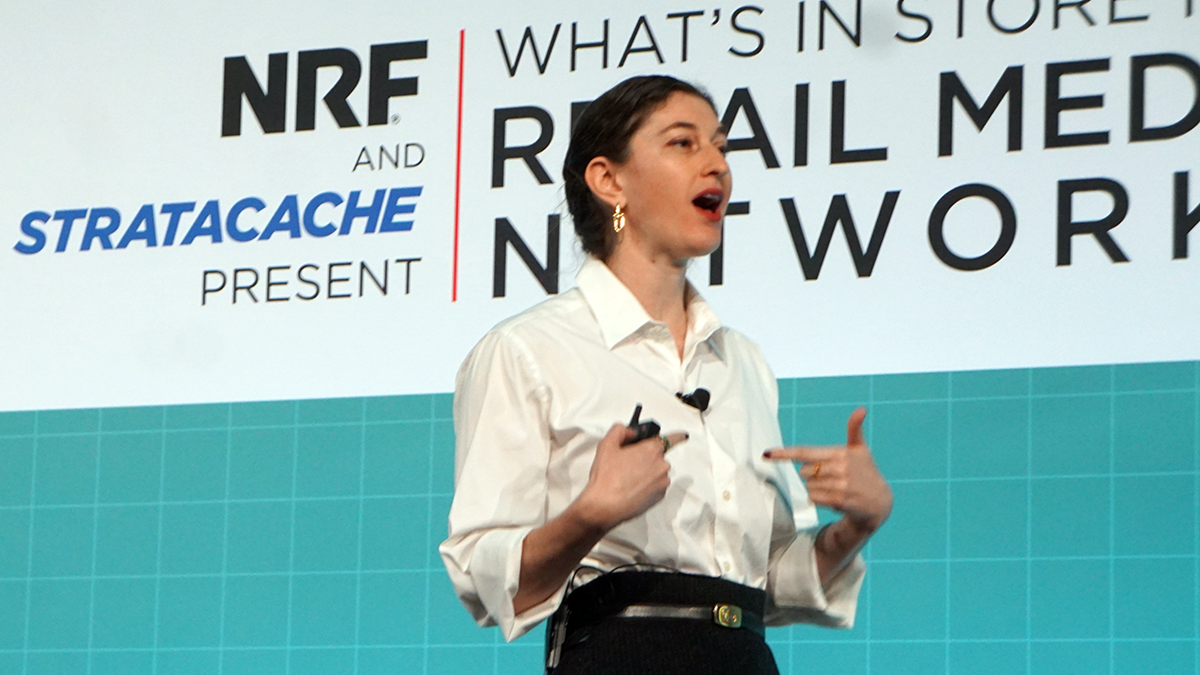
Leora Kelman discusses Retail Media Networks

FOR CPG MARKETERS, the rise of Retail Media Networks (RMNs) continues to create opportunities to drive brand awareness and sales lift in stores by advertising to shoppers much nearer to the point of decision.

The lion’s share of this ad spending in North America has been concentrated on a handful of the very largest digital RMNs. Now many more retailers are angling to capture a fair share of this growing pie, installing digital screens, promising better measurement and even bringing merchants to the table.

At January’s National Retail Federation (NRF) pre-Expo conference day in New York, “What’s In-Store for Retail Media Networks,” sponsored by STRATACACHE, an all-star cast of industry experts and practitioners offered bullish forecasts and strategic advice for advertisers.

Originallly published in CPGmatters.com, Feb. 2026. Reproduced here by permission.

“The retail media market is exceptionally concentrated between Amazon and Walmart,” said Leora Kelman, Managing Director and Partner for Boston Consulting Group, noting that Amazon will control more than 75% of all retail media spending “through at least 2027.”

In-store is a more level playing field than ecommerce. A handful of digital giants command more than half of all online retail sales, led by Amazon with 40 percent, Walmart with 7 percent, Apple and eBay with 3 percent each, as reported by eMarketer in its May 2025 Forecast.

By comparison, total retail sales are far less concentrated, with Walmart garnering 11 percent and Amazon capturing just 5 percent in the NRF 2025 Top 100 Retailers ranking.

“How do we capture that attention of all of the people that we are not reaching through Amazon and Walmart?” Kelman asked. “They are shopping local retailers and a much, much wider range of players. How do we make sure we’re telling stories across those touchpoints? This is a huge opportunity.”


Read more

Unified Shopper Engagement is Coming. Are Brands Ready?

Unified customer engagement panelists at Groceryshop

CALL IT UNIFIED SHOPPER ENGAGEMENT. Once-sharp dividing lines that have separated trade marketing from personalized offers from retail media are blurring, as trading partners pursue best total returns across the full marketing funnel.

At the recent Groceryshop event in Las Vegas, executives from Ahold Delhaize USA’s AD Retail Media, Kroger Precision Marketing, and Walgreens Advertising Group shared how their organizations are each taking a more connected approach with these core marketing processes, to cover more of the spectrum of shopper engagement. They have aligned organizational structures and platforms to make this possible.

“We brought the digital merchandising team inside the retail media practice,” said panelist Bobby Watts of Ahold Delhaize USA. “We call it our connected store initiative.”

Originallly published in CPGmatters.com, Nov. 2025. Reproduced here by permission.

Watts’ job title offers a clue to what’s happening. He is SVP, AD Retail Media, Digital Merchandising & Marketing.

He elaborated in an interview: “We believe that you need to bring these areas together and build a holistic omni-channel commercial plan. This includes brick-and-mortar display, brick-and-mortar promotions, and price.”

Read more

Tariffs and the Rising Cost of ‘Fresh’: Tactics for the Tomato Wars

tomato tariffs battle

THE HUMBLE TOMATO has become a high-profile emblem of the tariffs controversy, and grocers are faced with delivering dual bad news to shoppers: Prices are likely to rise; quality and availability could suffer.

With the announced imposition by the White House of a 17 percent tariff on Mexican tomato imports beginning July 14, the food industry was thrust further into pricing and operational uncertainty. Tomatoes have been the stars of recent media attention, but the broader issue of tariffs on food imports presents a complex set of challenges for retailers, growers, distributors and packaged food manufacturers.

Politics aside, sweeping food import levies would create a cascade of market effects. Price increases may be expected to depress demand. Transportation from southern border ports of entry would decrease proportionately. Domestically-farmed substitutes, such as those in Florida and California, may travel greater distances to the points of consumption and remain in cold storage for longer periods. The demand for seasonal farm workers could rise. Dependent manufacturing sectors, like the $7 billion U.S. frozen pizza industry, may need to absorb or pass along increased ingredient costs.

That’s just tomatoes. Thanks to its favorable soil, climate and proximity, Mexico has also become an important supplier of avocados, bell peppers, eggplant, spring table grapes and citrus fruits to American consumers, a circumstance initially made possible by the favorable rules of the 1994 NAFTA agreement, later superseded by the 2018 United States-Mexico-Canada Agreement (USMCA).

Read more

Is Category Management Ready for AI?

AI Category Management

WITH THE ADVENT of Artificial Intelligence, Category Management is poised to get faster, more frequent, more connected and more accurate.

At least those are the promises we keep hearing from advocates of AI-powered decision tools: Your AI agent will access more and better data sources… Its decision tools will slash the duration of planning cycles… It will recommend actions in minutes that presently occupy countless hours for human merchants… It will plan and track personalized promotions with greater granularity… It will free human experts to focus more on strategy and less poring over spreadsheets.

If even some of this turns out to be true, CPGs could be facing some foundational changes in the way they collaborate with retailers to bring their products to market.

For Dr. Brian Harris, widely credited as the developer of the eight-step framework that solidified Category Management in 1997, AI holds the potential to re-animate a widely-used business process that has become a rote (plodding) exercise for many.

“Six months to develop a plan is no longer good enough. You need it within six weeks or even six days,” he said.

Read more