
FOR CPG MARKETERS, the rise of Retail Media Networks (RMNs) continues to create opportunities to drive brand awareness and sales lift in stores by advertising to shoppers much nearer to the point of decision.
The lion’s share of this ad spending in North America has been concentrated on a handful of the very largest digital RMNs. Now many more retailers are angling to capture a fair share of this growing pie, installing digital screens, promising better measurement and even bringing merchants to the table.
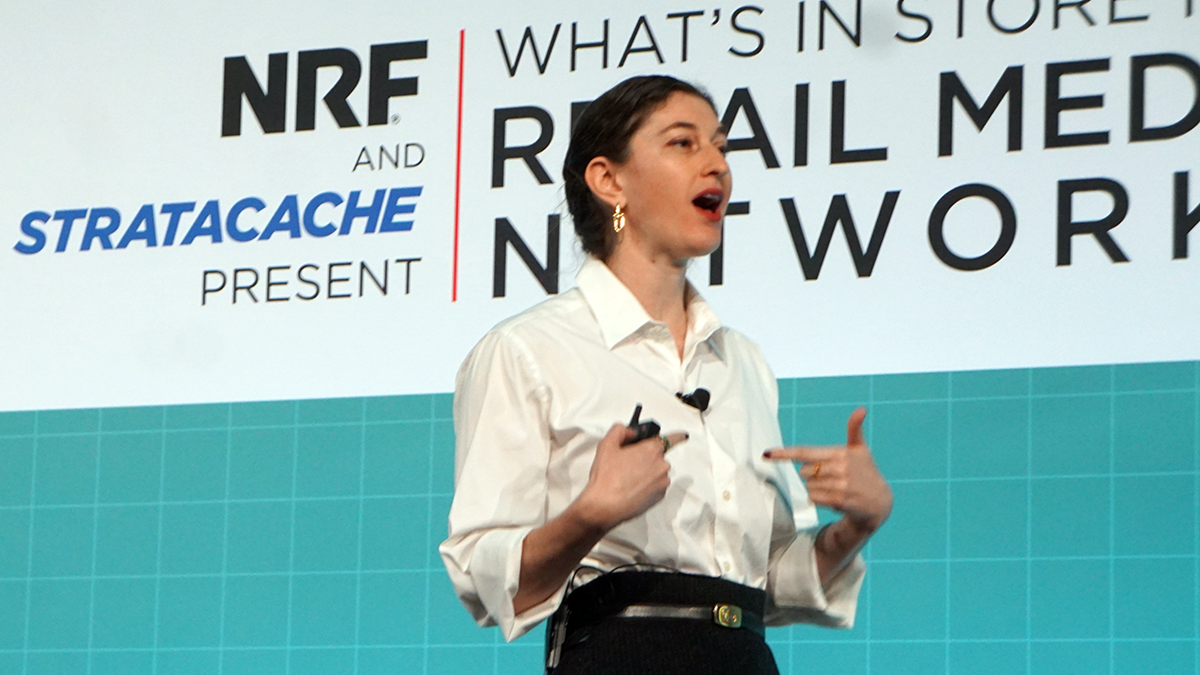
At January’s National Retail Federation (NRF) pre-Expo conference day in New York, “What’s In-Store for Retail Media Networks,” sponsored by STRATACACHE, an all-star cast of industry experts and practitioners offered bullish forecasts and strategic advice for advertisers.
Originallly published in CPGmatters.com, Feb. 2026. Reproduced here by permission.
“The retail media market is exceptionally concentrated between Amazon and Walmart,” said Leora Kelman, Managing Director and Partner for Boston Consulting Group, noting that Amazon will control more than 75% of all retail media spending “through at least 2027.”
In-store is a more level playing field than ecommerce. A handful of digital giants command more than half of all online retail sales, led by Amazon with 40 percent, Walmart with 7 percent, Apple and eBay with 3 percent each, as reported by eMarketer in its May 2025 Forecast.
By comparison, total retail sales are far less concentrated, with Walmart garnering 11 percent and Amazon capturing just 5 percent in the NRF 2025 Top 100 Retailers ranking.
“How do we capture that attention of all of the people that we are not reaching through Amazon and Walmart?” Kelman asked. “They are shopping local retailers and a much, much wider range of players. How do we make sure we’re telling stories across those touchpoints? This is a huge opportunity.”
Retail Media’s Sleeping Giant Awakens
Chris Riegel, CEO & Founder of STRATACACHE, greeted the event, describing in-store media as “a sleeping giant.” He elaborated, “Online is a huge driver. It will continue to be a big factor in everyone’s life. But 83.6% of every shopping dollar is still spent in stores.”
Total retail media spending will top $70 billion this year, said Sarah Marzano, Principal Analyst, Commerce Media at EMARKETER. “If we look beneath the surface – and I know this is an uncomfortable truth that we all sit with here in the U.S. – retail media ad spend remains heavily concentrated.
“By the end of our forecast period in 2029, in-store will have just broken the $1 billion mark, which is only around 1% of all retail media ad spend.”
Marzano added, “By now, we’re all painfully aware of the frustration and fatigue advertisers feel when it comes to scaling their spend across a greater number of networks.”
In a recent EMARKETER survey conducted with Bain & Company, “Seven out of ten of the ad buyers who are spending in-store today are spending with two or fewer retail media networks.”
This is a limitation, according to Marzano. “Advertisers who are prioritizing just Amazon and the largest players are missing out on giant swaths of their consumers’ purchase behavior.”
Put Consumers Front and Center
“We’re talking about in-store versus online versus what you can do from a trade perspective and merchandising, putting it all together,” said panelist Meera Patel, Senior Director, Global Omnichannel Advanced Analytics at Mars Inc. “I think the piece that we’re not talking about enough is the consumer. We have to put the audience first.”
Brand planners at Mars start by identifying a given audience and try to understand how they’re actually engaging across various promotional channels. They view Retail Media Networks as one of those channels.
Patel elaborated, “When we’re planning, we think first of who we want to reach and what message we want to drive. We don’t care if they’re online. We don’t care if they’re in the store. We want to make sure that we’re reaching them where we can meet them via media consumption or how they’re actually buying. And that varies depending on the retailer.
“A lot of the standardization comes from driving the conversions you’re trying to create with the audience, not necessarily from the retail media side, because when you’re looking at the retail media side and you’re looking at the client side, every single client is going to have a little bit different or unique way of how they measure and how they look at media,” Patel said.
Automate and Measure Retail Media Networks
Arthur Sylvestre, VP Digital Commerce, Danone North America, said, “What we need to understand is in-store media is not the same as digital media. It’s a combination of traditional ways of buying and doing things at the same time to lay it on top with all the sophistication that you’ve brought in. They have to work in tandem.”
Media buying automation using programmatic methods similar to those used in digital or even AI agents are coming fast, but he warned, “It can never override store operational rules. Store operations, store principles, they still take precedence because you can’t do without them.”
Sylvestre added, “You have to have strict guard rails in place and then let the automation follow or work within those boundaries.”
He stressed that media buying methods must accommodate to “the real in-store world.”
“It has to work in tandem. Work with the merchants. Make sure that we never override that relationship, because it’s extremely delicate. For retail media overall to scale to where we want it to go, all of these teams have to work together,” he said.
Measurement Systems Wanted
Marzano of EMARKETER stressed that RMN measurement systems built for digital advertising just weren’t designed to accommodate in-store channels. “Eight in 10 of the in-store ad buyers we surveyed said it is at least moderately difficult to integrate the results of their campaign reporting into the way they measure and understand retail media performance today.”
Patel observed, “If you’re not focused on the audience, then it doesn’t matter if you’re buying in-store, online or how you’re measuring it if you’re just not reaching the right audience at the right time. So, then you’re not tracking results.”
“I know I’m standing a little bit on my soapbox here,” Patel added, “but like I think in my mind it’s more about understanding where the audience is going and how new mediums actually impact those audiences and their media consumption and how we’re actually driving measurement.”
Said Sylvestre, “Advertisers start seeing results because we can now repeat the same results over time. And that’s what matters. The outcomes have to be repeatable. It can’t be a one-off basis because then there’s not enough trust that my money is going to pay off on the next bet.”